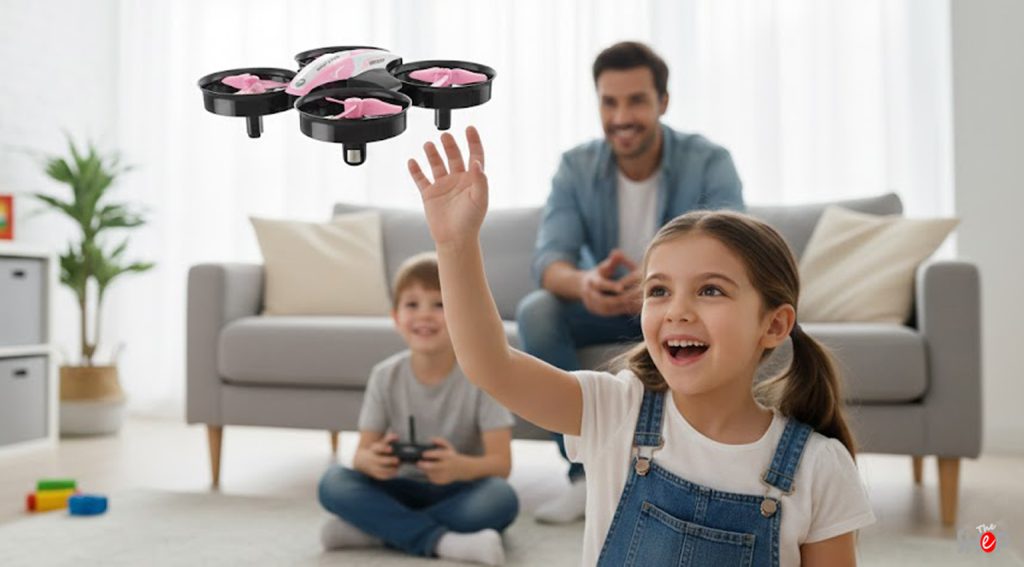
The best mini drones for kids aged 5–12 are designed to be safe, fun, and easy to control while helping children learn the basics of flying. In 2026, mini drones have become smarter and more durable, making them perfect toy drones and beginner drones for young pilots.
Whether you’re buying a drone for your child’s birthday, a holiday gift, or an educational activity, mini drones offer a great mix of entertainment and learning. Many models include full propeller protection, altitude hold, and simple controls that reduce crashes and frustration.
In this guide, we review the best mini drones for kids, focusing on safety, durability, and ease of use. You’ll also find smart buying tips, key features, and comparisons to help parents make the right choice while exploring related guides like Best Drones Under $100 and Best Camera Drones for Beginners.
Let’s check out the four best Mini Drones your Kids will go Nuts for!
Want a mini drone your kids will instantly love? The Q9s Drone for Kids delivers exciting RC fun with simple controls, durable design, and cool flying tricks that keep kids entertained for hours.
The Holy Stone HS210 is one of the best mini drones for kids thanks to its durable build and simple flight controls. Designed specifically as a beginner drone, it includes altitude hold, headless mode, and full propeller guards for added safety. The lightweight quadcopter is easy for small hands to control and can perform fun 3D flips with one button. Its modular batteries make swapping quick and convenient, allowing kids to enjoy longer play sessions. The HS210 is crash-resistant, making it ideal for indoor flying and early learning. Parents appreciate its sturdy design, while kids love its smooth flight and fun tricks. This drone is a great introduction to remote control toys and aerial movement.
Key Features
Altitude hold for stable hovering
Full propeller protection
One-key flips & headless mode
Lightweight quadcopter design
Ideal For:
Kids ages 6–10
Indoor flying
First-time drone users
Pros
Safe and durable
Easy controls
Budget-friendly
Cons
No camera
Short flight time per battery
“For a detailed breakdown of safety features, battery life, and real-world performance, check out our Holy Stone HS210 Review.”
2. Holy Stone HS190 – Best Foldable Mini Drone for Kids
The Holy Stone HS190 is a compact and foldable mini quadcopter designed specifically for kids and beginners. As one of the best mini drones for young users, it offers simple one-key takeoff and landing, headless mode, and speed adjustment levels to match a child’s learning pace. Its lightweight design and full propeller protection make it safe for indoor and outdoor play. The foldable arms allow easy storage, making it a great travel-friendly toy drone. While it doesn’t include a camera, the HS190 focuses on safe flying fundamentals, helping kids build confidence and coordination. This drone works well as a STEM learning tool, teaching basic flight mechanics through hands-on fun.
Key Features
Foldable quadcopter design
One-key takeoff & landing
Headless mode
Full propeller protection
Ideal For:
Kids ages 6–10
Beginner pilots
Indoor & light outdoor use
Pros
Very easy to control
Portable and lightweight
Safe for kids
Cons
No camera
Limited flight time
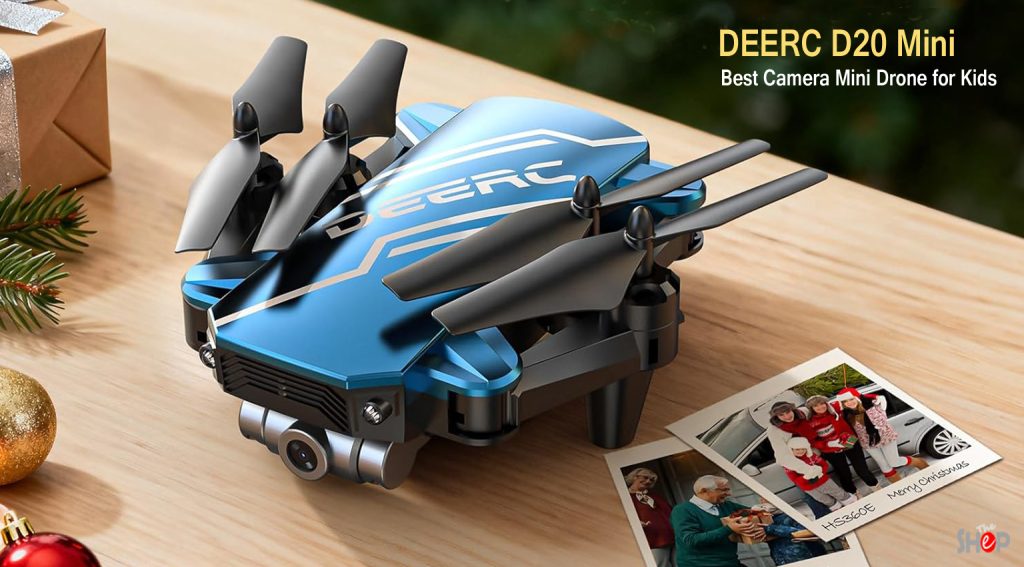
3. DEERC D20 Mini – Best Camera Mini Drone for Kids
The DEERC D20 Mini is a kid-friendly quadcopter that introduces aerial photography in a simple and fun way. Equipped with a basic HD camera, it allows kids to capture photos and videos while learning drone control. Features like altitude hold, voice control, and app connectivity make flying interactive and exciting. The lightweight design and full propeller guards ensure safety during use. This mini drone bridges the gap between toys and real camera drones, making it perfect for kids who want more than just flying.
Key Features
HD camera
Altitude hold
Voice & app control
Propeller protection
Ideal For:
Kids ages 8–12
Beginner aerial photography
Creative play
Pros
Camera included
Fun smart features
Easy learning curve
Cons
Camera quality is basic
App required for full features
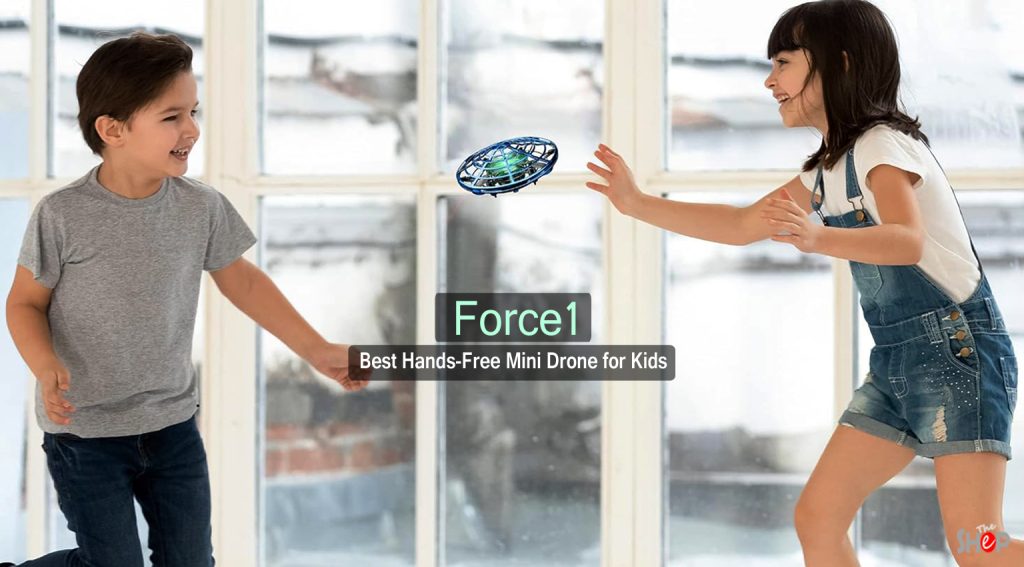
4. Force1 Scoot Hand Operated Drone – Best Hands-Free Mini Drone for Kids
The Force1 Scoot is a unique hand-operated toy drone that delivers fun without traditional remote controls. Designed for younger kids, this mini drone uses motion sensors to hover above hands, making it one of the safest and easiest beginner drones available. Its full propeller protection ensures safe indoor play, while colorful LED lights keep children engaged. Because it doesn’t require complex controls, the Scoot is ideal for introducing kids to flying concepts without frustration. Parents love its durability and simple operation, while kids enjoy the interactive hands-free experience. This drone works well as a remote control toy alternative and encourages active play rather than screen time.
Choosing the right drone for a child aged 5 to 12 means prioritizing different features than you would for an adult enthusiast. Here is a deeper dive into the factors that make for the best mini drones for this specific age group.
Focusing on Safety and Durability
For children, durability is the most important feature. A drone will be crashed—that is a guarantee!
Propeller Guards: Look for models with full propeller protection (like the Holy Stone HS210). This protects not only the drone’s rotors from breaking but also protects children’s hands and your walls/furniture from damage.
Material: ABS plastic frames are tough and lightweight, making them less likely to break on impact and less likely to cause damage if they hit something.
Weight (Under 250g): Most mini drones weigh less than 250 grams (8.8 ounces). This is a critical point because drones over this weight typically require FAA registration in many regions (like the US and Canada), which is an unnecessary complication for a toy.
Ease of Control: Keeping the Fun High and Frustration Low
A complicated drone will end up in a drawer after one use. Look for these beginner drone features:
Altitude Hold: This feature uses sensors to automatically maintain the drone’s height. The child only has to worry about steering, which dramatically reduces the frustration of learning to fly.
One-Key Takeoff/Landing: Simple press of a button to launch and land the aircraft. This is easier than trying to coordinate the throttle stick.
Headless Mode: This feature simplifies orientation. Instead of needing to know which way the drone’s “head” is facing, the drone will always move in the direction the pilot pushes the control stick, relative to the pilot. This is crucial for younger kids.
Speed Modes: The best mini drones offer multiple speeds (low, medium, high). Start the child on low speed to build confidence before moving them up.
The Camera Question: Toy vs. Hobby
Should a kid’s drone have a camera? The answer depends entirely on their age and interest.
Ages 5-9 (Toy Drones): A camera is usually unnecessary. These kids are focused on the pure joy of flying and watching it buzz around. Camera features often add cost, complexity, and fragility without adding value to their experience. The Potensic A20 is a good example here.
Ages 10-12 (Beginner Hobby Drones): This is the sweet spot for a camera. A model like the Ryze Tello offers a decent camera that can introduce them to aerial photography and videography, turning a simple toy into a productive hobby.
Battery Life and Recharge Time
The biggest complaint with mini drones is usually the short flight time, which is typically between 5 and 10 minutes.
Multiple Batteries are Essential: Always try to purchase a drone that comes with three or more batteries (or buy a separate multi-pack). This allows the child to fly for 15-30 minutes non-stop by swapping out batteries, turning what would be a short, frustrating experience into a much more enjoyable one.
Charging: Many drone kits come with multi-chargers, which are fantastic for recharging all batteries at once.
The best mini drones for kids are lightweight, durable, and include safety features like propeller guards and altitude hold. Popular options include Holy Stone and DEERC models.
2. Are mini drones safe for children?
Yes, mini drones are safe when used with supervision. Models with full propeller protection and stable hovering are ideal for kids.
3. What age is suitable for mini drones?
Most mini drones are suitable for children ages 5–12, depending on control complexity and safety features.
Yes, beginner camera drones like the DEERC D20 Mini allow kids to explore basic aerial photography safely.
Conclusion: Choosing the Right First Drone
Choosing the Best Mini Drones for Kids is all about balancing safety, fun, and ease of use. For children ages 5–12, mini drones offer an exciting way to learn basic flying skills while developing coordination, creativity, and confidence. Models like the Holy Stone HS210 and Holy Stone HS190 focus on beginner-friendly controls and strong propeller protection, making them ideal first drones. Kids interested in taking photos will enjoy the DEERC D20 Mini, which introduces simple aerial photography in a safe way. For younger children, the Force1 Scoot Hand Operated Drone provides hands-free fun without complex controls. No matter which option you choose, these mini quadcopters make excellent gifts and engaging STEM learning tools that keep kids entertained while learning through play.
Jose E. Johnson is a true tech prodigy whose lifelong passion for technology and gadgets has blossomed into remarkable drone expertise. From the moment he laid eyes on his first electronic toy as a child, Jose was captivated by the limitless possibilities of innovation. As he grew, so did his fascination with cutting-edge tech, leading him to become a bona fide drone expert. With an insatiable thirst for knowledge, Jose delved deep into the intricacies of drone technology, amassing a wealth of technical knowledge and hands-on experience. Now, he shares his wisdom through insightful drone reviews and invaluable tips for fellow enthusiasts, making him a trusted source in the drone community.








Leave a Reply